Unity Addressables Guide (4): Asset Loading and Memory Release

The reason we don't load all resources at startup and instead load on demand is memory efficiency.
That's why "unloading" is just as important as "loading." Resources that are no longer in use must be released from memory.
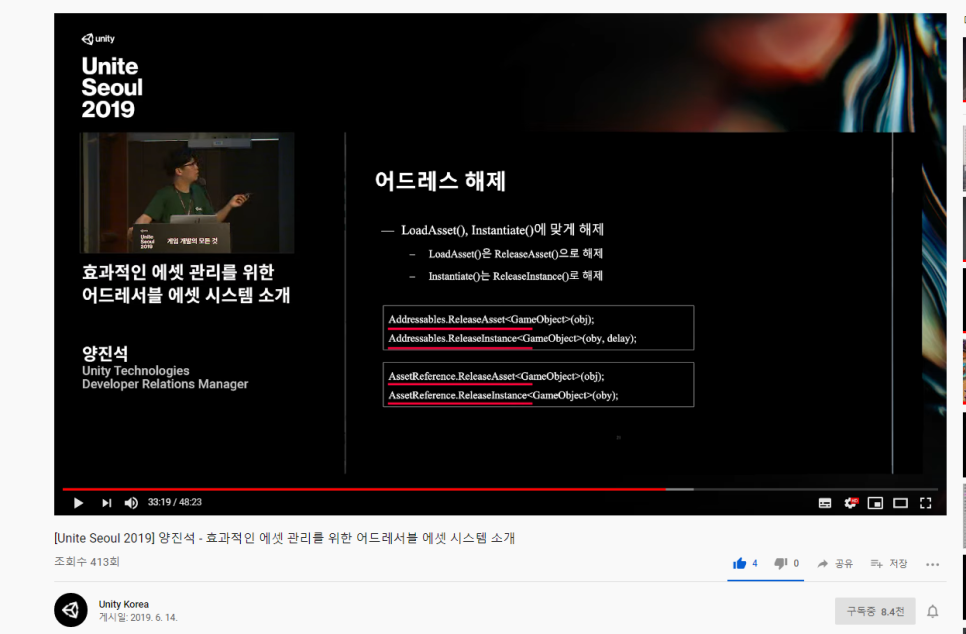
The loading approaches covered in the previous post boil down to two patterns:
- Loading only the asset
- Loading and instantiating together
These two patterns also require different release APIs.
The screenshot above is from the 2019 Unite Seoul Addressables session on release handling. The video references ReleaseAsset.
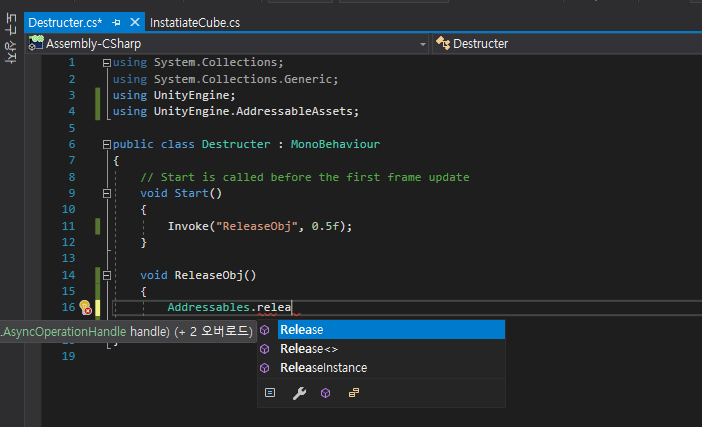
However, as of Addressables 1.1.10, the API has been consolidated around Release rather than ReleaseAsset.
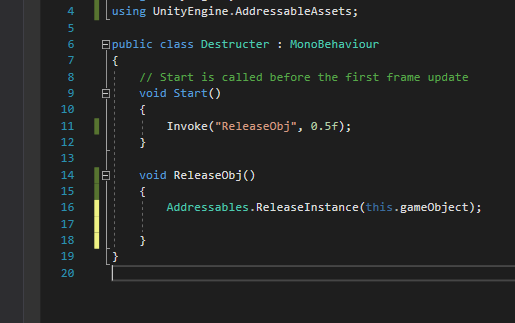
For objects created via instantiation, ReleaseInstance is the recommended release method. (While Release may also work, using the release API that matches the creation pattern is the safer approach.)
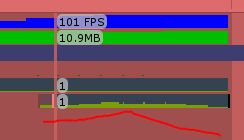
After release, I confirmed that the reference count decreases correctly and instantiated objects are properly cleaned up.